Friday, 22 February 2013

Souvlaki & Mutaween

Today was my first encounter with a muttawa, a member of Saudi Arabia's religious police. The religious police force is often called hay'ah, which in English translates into "the Commission", a shortened version of "the Commission for the Promotion of Virtue and Prevention of  Vices". As you can imagine, they're a very well-liked bunch by the expat community. After all, who doesn't want to get bullied into complying with the rules of a religion they don't follow?
Anyway, here's what happened. This morning my sister announced that she needed some school supplies. Not having a driver and my father being away on a business trip, a family friend, who is also Greek, offered to drive us all to the bookstore. By the time we were finished shopping, the store was beginning to lock up for prayer time. Walking through the parking lot, I suddenly remembered that someone told me about a Greek souvlaki place right down our street and suggested we go check it out, since it was on our way. The prospect of a taste of home was too exciting for anyone to resist, so we headed over. Luckily, it hadn't closed for prayer yet, so we entered. Not surprisingly, a group of Filipino guys were behind the counter, working the skewer and wrapping the souvlaki. We ordered, and when the employees found out we were Greek, they engaged us in conversation, telling us that their boss is in Greece now, that he is planning on opening another restaurant in Jeddah, asking us how long we've been here etc etc. We were blissfully unaware that it was officially prayer time, until someone whispered forcefully "Muttawa!".  The man who was talking to us leaped over to close the shades, but it was too late. The door was already open and the muttawa was standing outside in all his bearded glory. Accompanying him was a big guy in military attire, a surly expression on his face. 
The muttawa did all the talking. First, he confronted the restaurant employees for not locking up for prayer time. They were very apologetic, but didn't look too worried, especially when a young Saudi employee from one of the neighbouring shops jumped in to defend them. It seemed as if he was saying something along the lines of  "Never mind them, they're Filipinos, they're clueless when it comes to our ways". Next, he rounded on our family friend. He very pointedly avoided looking at us women, as that would hardly qualify as "promoting virtue".  Squinting menacingly, he asked, "Inklish?
"Yes, sorry, no Arabic."
"She wife?" the muttawa demanded.
"Of course!",  our friend replied cheerfully. "We've only been in Saudi Arabia for a little while, this is the first time she's come out of the house", he continued to lie through his teeth.
"In Saudia, women cover hair", the muttawa declared in a didactic tone. 
I could practically feel my hair audaciously grow two sizes in the humidity, as if protesting this comment, so I quickly wrapped my hijab around it as best as I could. It looked totally sloppy, but it was enough to save everyone from the promiscuity that is my hair. Apparently.
"You Germany?" , he asked next. (We all have dark hair and complexions so I have no idea how he came up with that)
"No, no, Yunani!", our friend proclaimed with pride, using the Arabic word for "Greek".
Now, people in Saudi Arabia have always greeted our Greek nationality with enthusiasm. I'm not sure why, but they really like us. I never expected this to happen, though. The muttawa's savage face immediately broke into a huge yellow grin and he exclaimed: "Welcome, Welcome!", shaking our friend's hand vigorously. And just like that, the scolding was over.  The muttawa and his crony returned to their vehicle and left to prevent vice occurring elsewhere.
So, that was my first run-in with a muttawa. I had heard stories of people getting arrested or beaten by the religious police, even of a British man who was dragged forcefully to the mosque to pray, so I definitely wasn't expecting it to be such a mild encounter. To be honest, I was half-hoping for a bit more drama. Nothing too serious, maybe a bit of yelling in incomprehensible Arabic. Anyway, it was still an interesting experience, and we were actually very lucky to get away with it so easily.
Oh yeah, I did have souvlaki in the end. It was excellent.


Bahrain Photos

I wasn't able to add many photos to my last post about Bahrain, so here are some more pictures I'd like to share. First some from the interior of Al-Fateh Grand Mosque:

The courtyard in early evening, as seen from one of the mosque's stairwells.

Men performing al-maghrib, the prayer that begins as the sun sets. Women pray in a separate, much smaller room. Notice the horizontal stripes on the carpet. They exist to ensure the devout pray in an orderly fashion.


The magnificent chandelier from Austria. In fact, most (if not all) of the materials used for the construction of this mosque were imported: the carpet was woven in Ireland, the marble was extracted in Italy and the doors are made of Indian teak wood.


In the last post, I only mentioned the jewellery stores found in Gold City, but there are also a fair few tourist shops, literally overflowing with unique souvenirs, like shishas, belly dancing outfits, containers for henna body paint, prayer rugs, genie lamps, arabian tea sets, even pricey antiques. The clutter in these stores was unbelievable. I'm still amazed I didn't knock anything down, although one of the shopkeepers actually broke a porcelain camel while skipping around showing us his "happy, happy prices". Take a look:


Lots of great faux-arabian jewellery if you're not prepared to dish it out for the real deal.


Our second day in Bahrain, we decided to check out Muharraq, an island just 7km from Manama, easily accessible by car. It's also where Bahrain's International airport is located. The concierge back at the hotel had mentioned "The Lagoon" as a nice area to walk around and have lunch or a coffee.


As you can see, "The Lagoon" is indeed a nice development, with plenty of trendy coffee shops and eateries, but there isn't much walking around to be done. We walked from one end to the other in about ten minutes, so we decided to head off to Muharraq's souk.

The souk in Muharraq is nothing to write home about, just another flea market. While walking around the area though, we ended up in some neighborhood, where we slightly intruded in the locals' everyday lives. I'm pretty sure camera-bearing westerners aren't a frequent occurence in these parts, but almost everyone had a friendly, albeit confused, smile for us.


Paying a visit as evening settles over Muharraq.


Doodles on a crumbling wall.


Peeking into someone's... home(?)


There was even a fass food joint. We decided to pass, though.


Back in Manama, the city's trademark building, the Bahrain World Trade Centre. It's the first building worldwide to feature power-generating wind turbines suspended between two towers. 


And, Manama's skyline....

Thursday, 21 February 2013

Manama Moments


Last week I was in Manama, Bahrain. Manama is a very popular destination amongst Saudis, because it's something of a libertarian zone very close to home. Just a short plane ride, or a few hours drive and they have unlimited access to all those pleasures they are denied back in the Kingdom: from the most innocent things, like cinemas or western clothing for the women, to alcohol consumption and commercial sex, it's all there for the tourist to enjoy. According to the local taxi drivers, weekends are a bit of a nightmare for them, as thousands of Saudis flock into the country, many of them on their worst behaviour. However, this isn't to say that all Saudis go to Bahrain looking to get wasted and sleazy. Plenty are just there for a breath of fresh air, so to speak.

My family and I probably belong to the latter category of tourists. It was really nice being in a slightly westernised, liberal environment, while still getting some insight into the Middle-East. I found Manama to be something in between Dubai and Jeddah. Despite its best efforts and even with its plethora of entertainment venues, Manama is less flashy and cosmopolitan than Dubai. Thanks to a lack of a substantial amount of western tourists and expatriates, the city has managed to preserve a great part of its cultural heritage, but it's not as, well...primitive, as Jeddah. The streets aren't littered with rubble and trash, shops aren't obligated to close for prayer time, women in mini skirts are no big deal. I'm thinking it's probably easier for a westerner to adapt to life in Bahrain, but again, Saudi Arabia makes for a more authentic Middle-Eastern experience.
Anyhow, here is my "Best of Bahrain" list: 

  • Al-Fateh Grand Mosque


This was the first time I had ever entered a mosque, since in Saudi Arabia infidels like me are barely welcome within the perimeter of one. The Al-Fateh Islamic Centre though, welcomes all, Muslims and non-believers alike. Entrance is free of charge and we had our own personal tour guide, who not only filled us in on information regarding the mosque, but was also eager to answer questions concerning any aspect of Islamic faith.
The mosque itself is simultaneously simple and an architectural beauty. As the name suggests, it's very spacious, being able to accommodate about 7.000 worshippers at a time. We were lead through a courtyard with marble floor, into the main prayer room, which was virtually bare. There was plush wall-to-wall carpet, a pulpit, from which Islamic scholars deliver sermons, and a niche in the marble wall, which indicates the direction of Mecca. Other than that, the only ornament was the elaborate chandelier imported from Vienna. I don't know about other mosques, but in Al-Fateh I found that there's this incredible serenity, making it an ideal place to pray and reflect upon oneself.
After a general tour of the mosque, we sat in the main prayer room with our tour guide and engaged in a spirited conversation about Islam. He seemed anxious to eliminate any misconceptions we may have as westerners exposed to constant negative propaganda about his faith, and he answered all our questions, even the ones meant to challenge him, in a patient and straightforward manner. I can't say I agreed with everything he said, but this discussion definitely helped me gain a better understanding of Islam and the Muslim way of thinking, and that was the point of it. All in all, the visit to Al-Fateh Mosque was a very valuable experience, one I truly enjoyed.


  • Manama Souk


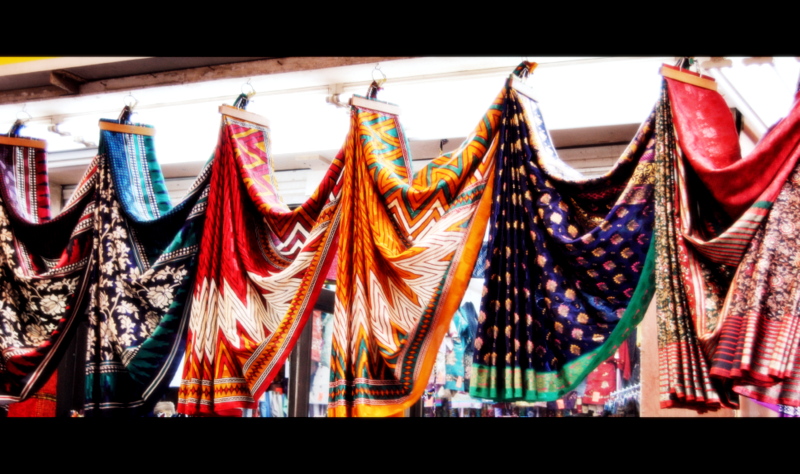
Like pretty much any city in the Middle-East, Manama has its own souk. This one happens to be a bit different from Jeddah's. The "concept" is the same, of course: several blocks of shops with the merchandise displayed out on the street. On the outskirts of Manama's souk though, there are many stores selling souvenirs, your typical "I <heart> Bahrain/Manama" T-Shirts, magnets, shot glasses, whatever, the type of thing you would have no chance finding in Jeddah, as there's really no tourism. Well, except for the millions of Hajj pilgrims, but I've never seen an "I <heart> Mecca T-shirt. Which is a shame really, I'm sure they'd be big sellers around here. Anyway. Some parts of the souk in Manama are a bit touristy, but as you progress further into the heart of it, things change completely, and you get to see Manama's huge Indian community. Arabic gives way to Hindi or Punjabi, abayas to saris, and within a few minutes you feel as if you've stepped into a neighbourhood in India. The stores in this part of the souk cater more to everyday needs, selling pots and pans, tools, colourful clothing and fabrics. There are also plenty of sweet shops, where you can buy delicious Indian treats like jalebi or gulab jamun. I always like visiting this sort of local market, because that's where you really get to feel the vibe of a place.


  •  Bahraini Pearls


In a different part of Manama's souk you'll find Gold City, a mini-mall with stores that sell mainly (you guessed it) gold jewellery. Gold isn't what attracts the tourists, though. It's Bahrain's most famous heritage item, the genuine Bahraini pearl. We ventured into one of the many jewellery shops that sell them, where the shopkeeper proudly presented us with a selection of gorgeous pearls, some of them no bigger than a grain of rice. He eagerly explained to us how pearls are formed: when something, ie a grain of sand or a piece of shell, enters an oyster's soft inner body, the creature, irritated, starts coating the foreign object with layers of a smooth, hard, crystalline substance, called "nacre", thus forming the pearl. There has always been an abundance of pearls in Bahrain's waters and the pearl-diving industry was thriving on the island long before oil was struck. Today, the pearl is mostly a national icon, with little economic importance. Now pearl-diving "expeditions" are often carried out by tourists decked out in snorkels and fins, and plenty of them actually find their very own Bahraini pearl to take home. 


Monday, 11 February 2013

Diving the Red Sea

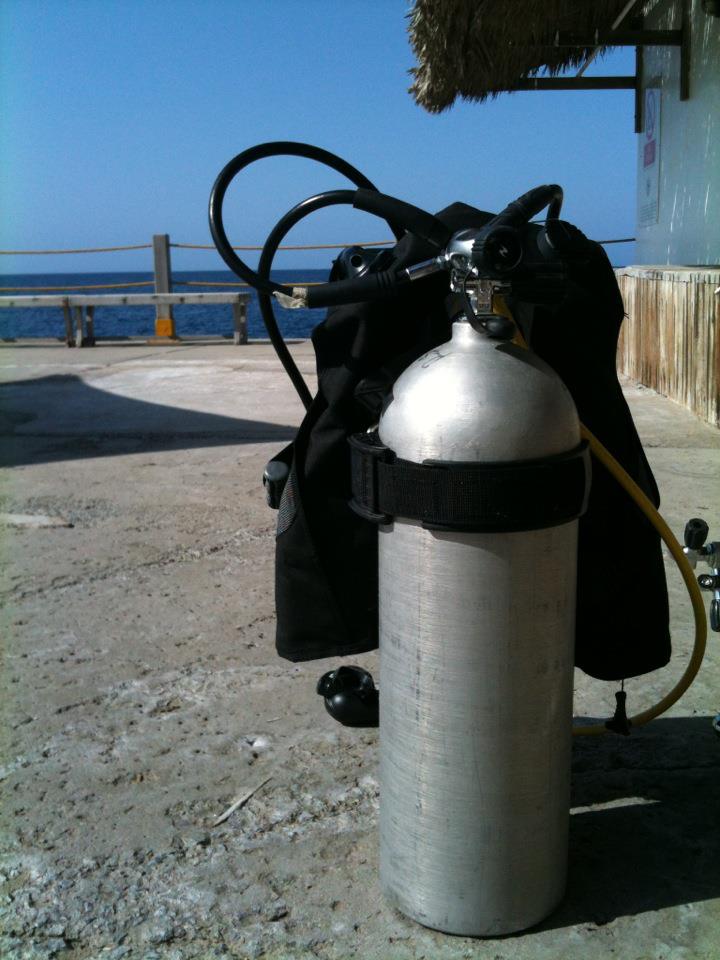
So, I haven't been blogging for a while, but there is a very good excuse for my absence. I've been taking a scuba diving course, which has been surprisingly time-consuming. Scuba diving is probably the number one weekend activity around here, not only because of the very limited entertainment options, but mainly because this part of the Red Sea is considered a prime diving location, and rightly so. Saudi waters hold perhaps as many reefs as the rest of the Red Sea combined, with flourishing aquatic life, all virtually unharmed, since only a minuscule number of divers have access to them.  

After 250 pages of scuba theory and 5 interesting, yet exhausting, pool sessions, it was finally time to hit the open water. Very excited, though slightly apprehensive, I began my descent with extreme caution, gripping the rope that was meant to guide me, remembering to equalise my ears every meter, and not daring to move my gaze away from my instructor. Eventually we settled in a sandy patch and I took my first look at my surroundings. I was greeted with such breathtaking beauty, I can honestly only describe that moment as magical. Just 10 meters under the surface lies this pristine coral reef, immense, colourful  and absolutely teeming with life. As we swam along, I didn't know where to turn my head first, afraid of missing out on all these amazing things: soft and hard coral in an incredible variety of colours, ranging from brown and red to vivid purple, in the most bizarre formations: spiky corals, corals that look like huge mutated mushrooms, fan-shaped corals, whip-like corals. I even noticed a type of coral that closely resembles a brain, right down to its pinkish colour.
And the fish! I've never seen such a variety of fish, even in aquariums. Thousands of underwater creatures,  tiny and large, gorgeous and ugly and weird. Some seemed to be bustling about purposefully, in schools or alone, as if they had business of the utmost importance to attend to somewhere in the reef, while others lay relaxed at the bottom or peeked out of holes taking in the view (or perhaps waiting for their next meal to swim by). Moving along the reef, my instructor pointed out some of the most fascinating species, scribbling their names onto her little waterproof whiteboard. We encountered the native to the Red Sea parrotfish, absolutely stunning, with scales in shades of green, blue, yellow and purple, pretty yellow angelfish, a beautiful lionfish, lying still, spines overflowing with deadly venom, and a fat, funny-looking fish called a masked pufferfish or "Zorro", because of the black markings around its eyes. I also got great a thrill out of watching a pair of clownfish weave in and out of an anemone (big fan of Finding Nemo).  There were so many creatures to see, it was impossible to take even half of it in.
I actually feel I should stop here, because I really don't have the words to convey the overwhelming beauty of this underwater world. I wish I had a waterproof camera to share my experience visually with everyone. Hopefully, I'll manage to borrow one from a fellow diver on one of my next dives, because I'm definitely doing it again as soon as possible! It's certainly the best experience I've had in Saudi Arabia so far, and it's something I would undoubtedly recommend to anyone trying to make life in the Kingdom a bit more interesting.


Sunday, 27 January 2013

Trip to Ta 'if

This weekend, we took a day trip to Ta 'if. Ta 'if is a city located on the slopes of the Sarawat Mountains near Mecca, about a three hour drive from Jeddah.

Almost as soon as we left the city and hit the highway, we came across signs determining which road must be taken by Muslims, and which by non-Muslims :


Non-Muslims are not permitted to drive through the holy city of Mecca, so we had to take the long way around. The non-Muslim road was narrow and the asphalt bumpy and cracked in quite a few places from the heat, making for a rather uncomfortable journey. We soon rode into the desert, which was nothing like the one in Dubai. No rolling dunes, no powdery, knee-deep golden sand, just a flat dusty landscape, with scraggly bushes and trees here and there. Even so, I thought it was interesting and charming in its own way. We encountered a number of Bedouin camps, which basically consisted of two-three rickety tents, often a truck parked to the side and sometimes a small herd of camels or sheep. At some point, we were lucky enough to witness a truly authentic Bedouin, dressed in traditional attire, shepherding his flock atop a camel.


After a couple of hours in the desert, we began ascending the mountain, which held an awesome surprise. Reaching the outskirts of Ta 'if, there were many cars parked on the side of the road and people gathered around looking at something behind the railings.We stopped to see what all the commotion was about, to be greeted by dozens of baboons. They seemed relatively tame and accustomed to the presence of people. Most were completely ignoring the crowd, focusing on the food that had been thrown out to them, removing each others ticks meticulously, or doing whatever it is primates do during their daily lives. Some, bolder than others, were reaching out and taking food right out of peoples' palms, or even leaping over the railing and walking amongst the delighted spectators.  In general, all of them looked as if they enjoyed the attention and the food, except for a few mother baboons, who were holding their tiny babies tight to their chests and half-hiding behind boulders.
                                                                                                                                                 

This guy seemed to be the boss. He was the biggest and all the other baboons kept a safe distance from him. If he had his eye on a piece of food not one of the others dared challenge him. He was pretty intimidating. However, all the other baboons were absolutely adorable, like these guys here:


This little one was a complete diva, jumping on the hoods of the cars and lapping up the attention: 


 The one thing that really got to me throughout the whole journey was the amount of litter everywhere. Both sides of the road, in the desert and on the mountain, were strewn with all sorts of rubbish: old tires, plastic bottles and bags, tin cans, construction site debris... I don't even know how half those things got there, seeing as it was literally the middle of nowhere. Saudis' lack of environmental consciousness is pretty scary. Just take a look at what was going on in the parking lot we stopped halfway up the mountain: 


Getting out of the car to gaze at the mountain scenery and stepping on a full diaper with cream coloured shoes isn't the best, I'll tell you that.


Anyhow, we finally reached Ta 'if. As a city, it's nothing spectacular, at least for European standards. However, it's cleaner and quieter than Jeddah, and manages to maintain a traditional feel to it, despite being a very modern resort city. At an altitude of about 2.000 meters , it's cooler as well, thus making it a great summer getaway from the larger cities, Riyadh and Jeddah. What made a great impression on me was the amount of amusement parks we encountered. We must have come across five or six within a few square kilometres. Maybe it's not so surprising though, considering that a resort city needs entertainment venues, and in Saudi Arabia every other type of fun is banned. 
  
Ta 'if is an agricultural area well known for its excellent grapes, roses and honey. It also boasts one of the last remaining truly authentic souks (marketplaces) in the Middle-East. Unfortunately, the souk is about 40 kilometres away from the city centre, so there was no time to visit it. We did do some shopping in an open-air fruit market, though,which had all sorts of lovely produce. In Jeddah getting fresh, good quality fruit is a bit difficult, since nothing is produced locally and everything must travel a long way to reach the consumer. 

One thing Ta 'if certainly seems to lack is ethnic and cultural diversity, judging by the absence of any other foreign faces and the way we were received by the locals.The waiters in the restaurant we had lunch and the salesmen at the fruit market were not only unable to communicate with us, due to their non-existent English, but also unwilling to do so.  The people we passed on the street also seemed baffled and annoyed by our appearance.The weirdest thing happened in the ladies room at the restaurant, though.When I opened the door there was already a woman inside by the sinks with a toddler. The minute she saw me, she snapped something very hostile-sounding at me in Arabic, covered her angry face hastily and rushed out the door dragging her child behind her. That didn't feel too great. I may have felt slightly uncomfortable at times in Jeddah, but no one has ever been openly hostile towards me. Oh well, you can't win them all.

All in all, I enjoyed Ta 'if. It's a nice weekend trip if you're in the area, the mountain air feels amazing and even the journey itself offers a unique experience. I mean, what are the chances of a troop of baboons flocking around your car in Europe?

Saturday, 19 January 2013

Jeddah's Corniche


Yesterday, I decided to take a stroll along the shore road, Jeddah's Corniche. The better part of the coast is inaccessible to the public, blocked off by the towering walls of the King's summer palace, which leaves about 3 kilometres of beach for the masses to enjoy.

It was quite crowded yesterday, as it was Friday, the last day of the weekend. Many local families were picnicking under the kiosks provided, on the stretches of lawn here and there, or even right on the concrete in front of the water. Saudis have the uncanny ability to picnic literally everywhere. I've seen families sprawled out on rugs in the middle of vacant lots, having a meal right next to piles of rubble and garbage. I've seen men taking their tea on the side of the road, the exhaust fumes from Jeddah's horrific traffic perhaps adding flavour to their cups. I've even seen a woman exit McDonald's with her children, lay down a mat and start chowing down on Big Macs right in the restaurant's parking lot. So, yeah, Saudis really seem to enjoy their meals al fresco, surroundings notwithstanding.

The Corniche though, is a very pleasant place to picnic, having recently been redesigned in order to provide the best for Jeddah's citizens. With a lovely view of the sea, adults and children engage each in their own activities. Men and women alike sit on rugs, chatting, having tea or smoking shisha, eating or even napping. Many had set up small grills and were barbecuing, causing the smell of cooking meat to mingle wonderfully with the salty air. The children were kept very busy as well. Some were wading in the shallows, pants rolled up, shrieking in delight every time the tiny waves splashed them (swimming is not permitted). A group of boys had set up a makeshift football field with empty soda bottles serving as goalposts, as boys all over the world do, and were having what seemed like a very intense game. There are also playgrounds all along the Corniche, where many children were swinging, sliding, climbing, running, and generally making the most out of the Corniche's new facilities.
 Everyone seemed to be having a very enjoyable time, and, to be honest, I felt a little out of place, as there were no other expats to be seen. Nobody spared me a glance though, at least not until I got my camera out, which caused a few wary looks my ways. Even so, by being as discreet as possible, I managed to get a few decent shots, even of people. Here are some of them:


A man strolls along the shore gazing thoughtfully at the water. Nothing like a walk by the sea to clear your mind.


A mother and her son walk toward the floating mosque at prayer time.


I really enjoy observing how the locals, with all their unique beliefs and customs, interact with each other.  I found myself wondering what these people's relationship is. Not that I would ever dream of asking...


After grabbing a cup of  Costa coffee from across the street, it's time to relax and get some sun. Those hands aren't going to tan themselves.


At kiosks like this you will find anything your heart desires, from refreshments and floaties, to carpets and tea kettles.


There are several mosques along the Corniche. I don't know anything about the first two mosques, but the one right above is Jeddah's Floating Mosque, also known as the White Mosque of Jeddah. It's a real architectural beauty and it's probably the number one attraction for Jeddah's very limited tourists.


Sunday, 13 January 2013

Fitting Room Mystery Solved

After an extended holiday in Athens, I have traded in my winter coat for an abaya once again, and returned to the Kingdom, ready to get back to blogging. The first post of the new year, brings what may be the explanation to one of the first things that struck me as incredibly odd in Saudi Arabia.

A few posts back I mentioned that most stores in malls don't have fitting rooms. Instead, the clothes must be bought, taken to the bathroom and tried on there. This is an arrangement I have not encountered anywhere else in the world, so I assumed it is the product of some Saudi belief. Saudis are very preoccupied with concepts like modesty, decency, etc, something very understandable, since they strive to live in accordance with Islamic law (Sharia). I was recently told by several people that there is a very concrete reason for the absence of changing rooms.
Apparently, a number of years ago, it was something of a trend for young (unwed) couples to meet up secretly in malls, the man concealing his identity under an abaya and a veil, so it would seem they were just two girls out shopping. These couples would often proceed to the then existing fitting rooms, where they would engage in acts of sexual nature. It seems that this scandalous, and indeed, very haraam* behaviour, became a frequent phenomenon. After a few of these incidents, it was decided that the root of this evil were the changing rooms, as they provided a space with enough privacy for the sinful act of premarital lovemaking. Lo and behold, they were removed from practically every clothing store.
I must stress the fact that this is just something I heard, so I can't be sure that it's the actual truth. It seems bizarre, but very plausible at the same time. After all, anything is possible in a place where sex is considered an extremely taboo subject and sexuality is, consequently, widely oppressed.

That's all for now, just a little fun fact until I can readjust to life in Saudi and start posting regularly. Also, I just added a subscribe field, so if you'd like to follow Hellenic Hijab, all you have to do is submit your e-mail address in the space provided on the top of the sidebar, and you will receive a notification every time a new post is published :)


*Haraam - sinful, a term used to refer to anything that displeases God (Allah) .